First-year medical student volunteered for a class ultrasound — then noticed something wasn't right with her kidney


Sometimes, a lucky coincidence can turn out to be life-saving. For a first-year medical student, Aria Moreno, that lucky coincidence happened when she volunteered to get scanned for an ultrasound class at Hofstra University. A mass was found on her kidney in September 2025, during a scan performed by Amanda Aguilo-Cuadra, a Northwell resident and a graduate of the school. Aguilo-Cuadra did the scan as a part of her anatomy class and immediately knew something was off. It allowed Moreno to get timely treatment, as reported by Eyewitness News ABC7 on Friday, December 5, 2025.

Aguilo-Cuadra was able to identify that Moreno was suffering from hydronephrosis, caused by some kind of obstruction in the kidney, most likely a kidney stone. It is a condition of the urinary tract that causes one or both of the kidneys to swell, according to the Cleveland Clinic. There can be a range of symptoms, including back or side pain, vomiting, fever due to a urinary tract infection, and so on. Moreno was surprised to hear her diagnosis because she hadn't experienced any such symptoms. Nonetheless, she was really thankful as she could get her condition treated at the right time because of the discovery. "I would have lost [sic] more function in my right kidney, maybe the whole thing," she pointed out.
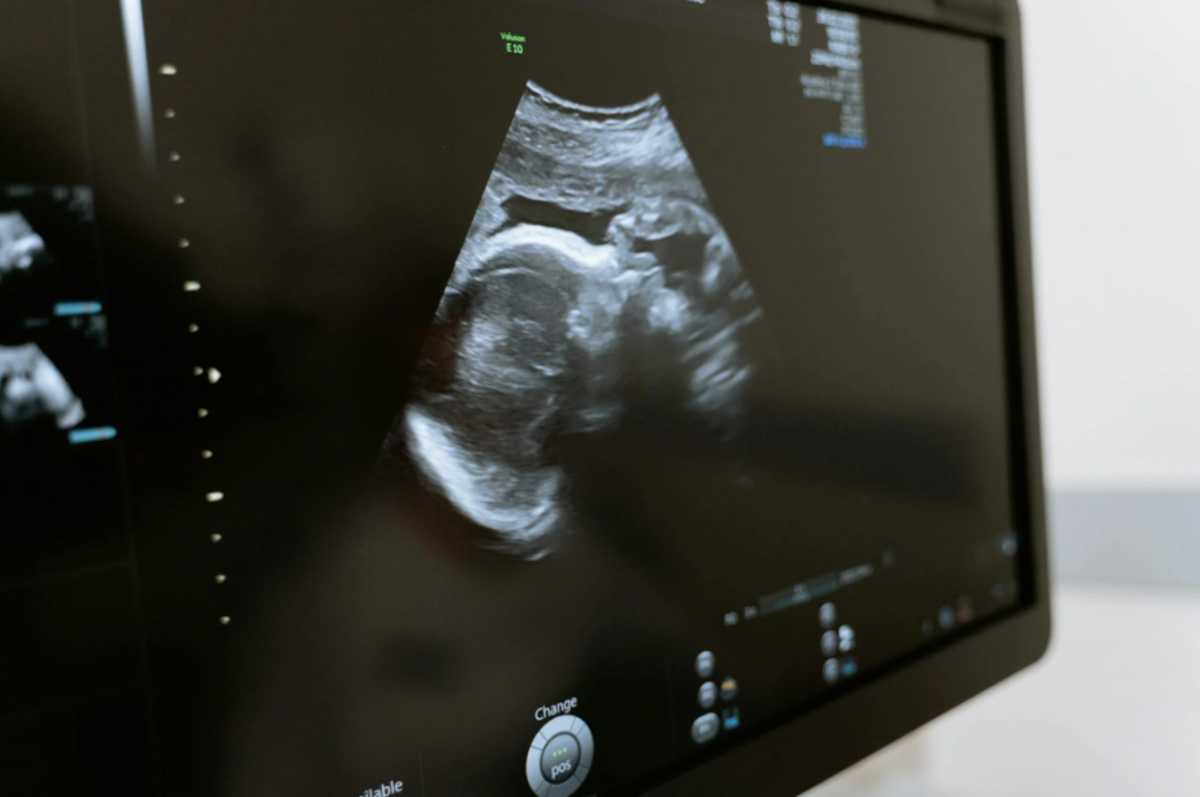
Moreno thought that she had made a great decision to get a scan at the Zucker School of Medicine under Hofstra University. "I think of it as we all learn on each other." Aguilo-Cuadra did the scan, spotted something abnormal, and waited for the class to end so she could personally tell Moreno about what she had seen. "Immediately, as soon as it popped up on the screen, I thought, OK, this looks very abnormal." Aguilo-Cuadra told Moreno, "I see some dilation. I'm worried you may have something called hydronephrosis." The first-year student needed a moment to process what was happening.

Soon enough, Moreno got surgery for her condition, and it could be treated with 50 percent function remaining in her right kidney and full function in her left. "It was tough, I had a couple of stents that were really uncomfortable, but I'm feeling back 100 percent now. Back to dancing, back to running, things I like to do," Moreno continued. The incident made the woman feel like she was at the school for an important reason indeed.
"It feels like a sign to me that I was meant to be here at this school, in med school, doing these things," she pointed out. On the other hand, Aguilo-Cuadra was glad that she could use her skills as a resident to save Moreno's life. She thanked her training at the school for the same. "Being a brand new resident coming into this field, it gave me a whole set of skills that I probably wouldn't have had."
School officials say only a small number of medical schools offer such in-depth ultrasound training starting in the first year, and completing it is required for graduation. The school's dean, David Battinelli, remarked, "We've been committed to point-of-care ultrasound training because we knew back then that that was the future."
This article originally appeared 1 month ago.