83 strangers saved her life after an emergency C-section left her bleeding uncontrollably — now her precious donation is helping other babies


For expecting parents, pregnancy comes with careful plans as they walk into appointments without fear. But for a mom named Kristin Gype, a standard ultrasound appointment became a race to save two lives. In August 2025, Dr. Gype, from Northeast Ohio, was 38 weeks pregnant with her second child and was expecting a smooth delivery. However, one routine checkup changed everything for her when doctors found something unusual, and she was asked to deliver the baby in the next 24 hours. Her amniotic fluid appeared cloudy, and that raised an immediate concern, WKYC 3 reported on December 15, 2025. Soon after delivery, she had to undergo surgery and received 53 units of blood, donated by 83 strangers. Now she is returning the gratitude with a precious donation.

In an interview with the outlet, Gype said, “It was odd to me that I had a normal pregnancy. And then, in that appointment, I was being advised to have my son in the next 24 hours.” Gype, who works as a Doctor of Nursing Practice and Nurse Anesthetist, was hoping for a natural birth. Her doctors decided to induce labor, and she was given an epidural. Her water broke overnight, and initially, it brought her some relief as everything looked normal. But things took a turn when her baby’s heart rate began to drop into the 30s. A standard heart rate expected for a fetus is typically between 120 and 160 beats per minute, according to the Great Ormond Street Hospital.

“I can see his heart rate starting to come down and [I'm] waiting for it to come up,” Gype recalled. “That means he might be having a stroke or an anoxic brain injury where he is not getting enough oxygen,” Gype told the outlet. Analyzing the situation, doctors acted immediately and performed an emergency C-section. In under 90 seconds, her son, Anthony, was born safe and healthy. However, the story did not end there; while her baby was healthy, her condition deteriorated rapidly. “I felt this impending doom… I felt like I was dying,” she recalled.
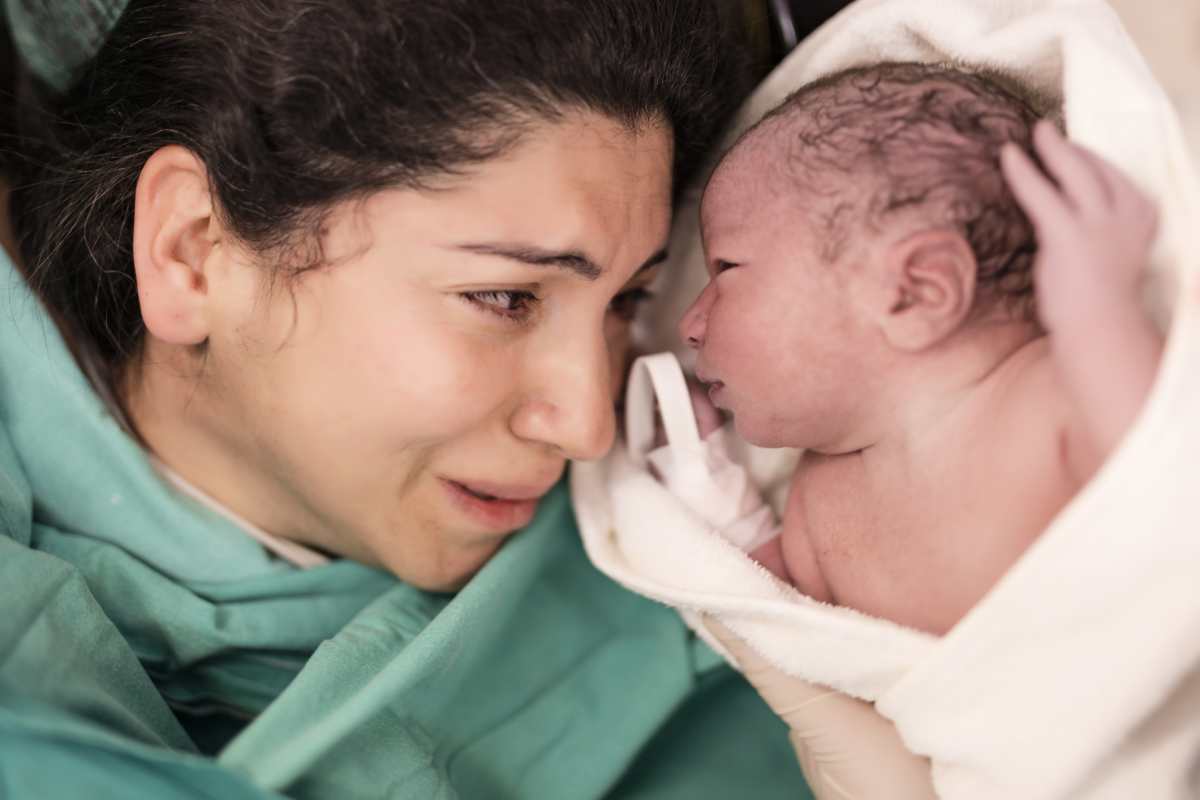
Though her condition was worsening rapidly, she remembered holding her newborn son. “We actually have a picture of it… I’m just kissing his nose, his little nose fits perfectly right in between my lips. And I’m just watching his eyes open and his breathing, and how calm he is,” Gype said. The doctors were struggling to stop the severe internal bleeding. Gype understood something was terribly wrong. She immediately turned to her left, screaming, “Please get me another IV. I feel like I’m dying. I feel it, I feel it, give me fluids.” The doctors told her that to save her life, a total hysterectomy was required, which meant having no more children. For Gype and her husband, the choice was immediate. “Our plan was to have a third, and that won’t be in the books for us, but we have each other. And both knew right away, we’d rather have a mom for our two existing children than not. And so we, in a split second, said to her, 'Do it, do it.'”

For the next 8 hours, the surgery was performed, and after 20 hours, Gype woke up in the ICU, weak and disoriented. By then, she had lost 15 liters of blood, which is thrice the amount an average human body has. But her life was saved by strangers, not one, not two, but 83 strangers who donated 53 units of blood in total. “I received enough blood to restore my blood volume three times over. If you were to do a DNA test on me, I wasn’t even genetically related to myself that day,” she said. However, just showing gratitude to the donors was not enough for Gype, and she decided to donate more than 3,500 ounces of breast milk to the Ohio Milk Bank. Her decision contributed to providing critical nutrition to newborns in intensive care units. Gype is also working toward becoming a regular blood and platelet donor with the Red Cross.

Amniotic fluid is a protective liquid that forms during pregnancy, surrounding a fetus like a cushion. It normally appears clear or pale yellow and odorless. This fluid, according to the Cleveland Clinic, protects the baby and supports lung, digestive, and muscle development.
More on Amplify
18-year-old knew he was ill—then he took a pregnancy test and it helped doctors save his life